A ship full of separate things
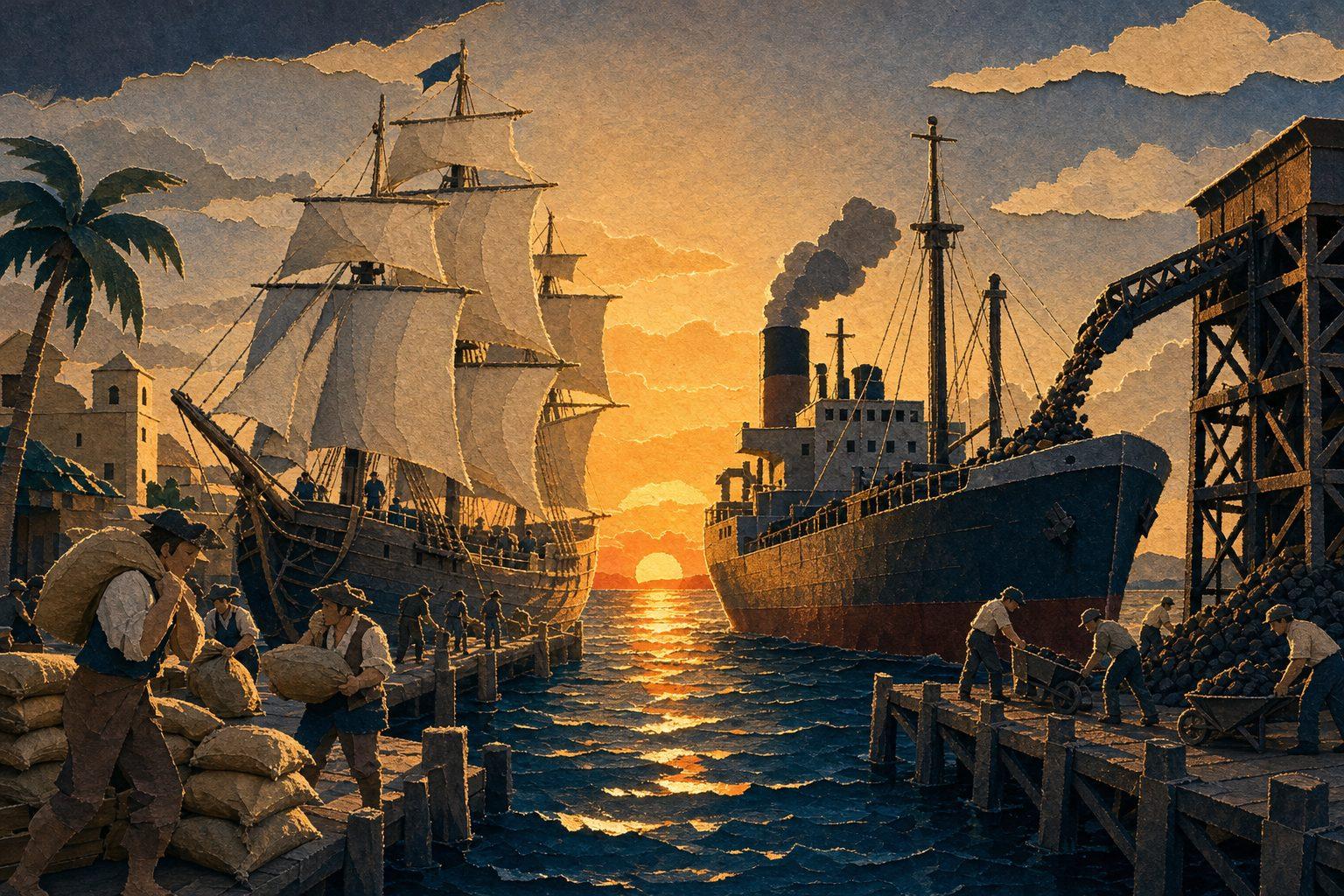
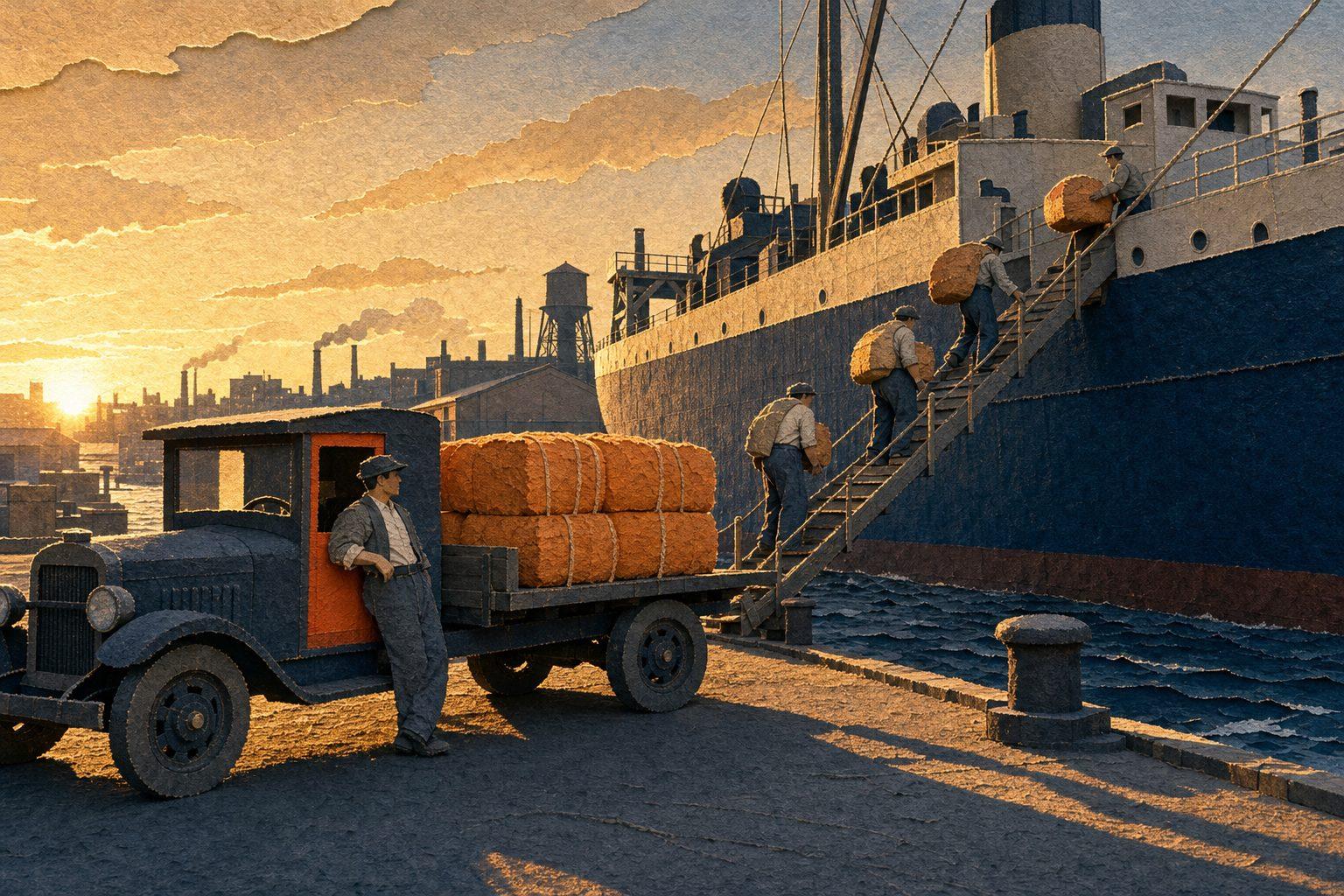
In 1954, an ordinary American freighter called the Warrior sailed from Brooklyn to Bremerhaven in Germany. On board were 194,582 separate items, from 1,156 different shipments: sacks, barrels, crates, bales and cartons. Every one of them was carried aboard by hand, stowed, lifted out again in Germany, counted and checked.
That was normal. A cargo ship could spend as much time tied up in port as it spent at sea. Handling the cargo could eat up as much as half the cost of a voyage. The expensive part of shipping was not the ocean. It was the few hundred metres at either end.
A trucker's idea
Malcom McLean had built a large trucking company in the American South, so he knew the problem from the land side. He later said the idea came to him in 1937, after waiting most of a day at a dock in New Jersey while his cotton bales were carried aboard one by one. Whether it happened exactly like that, nobody can check. The frustration was real.
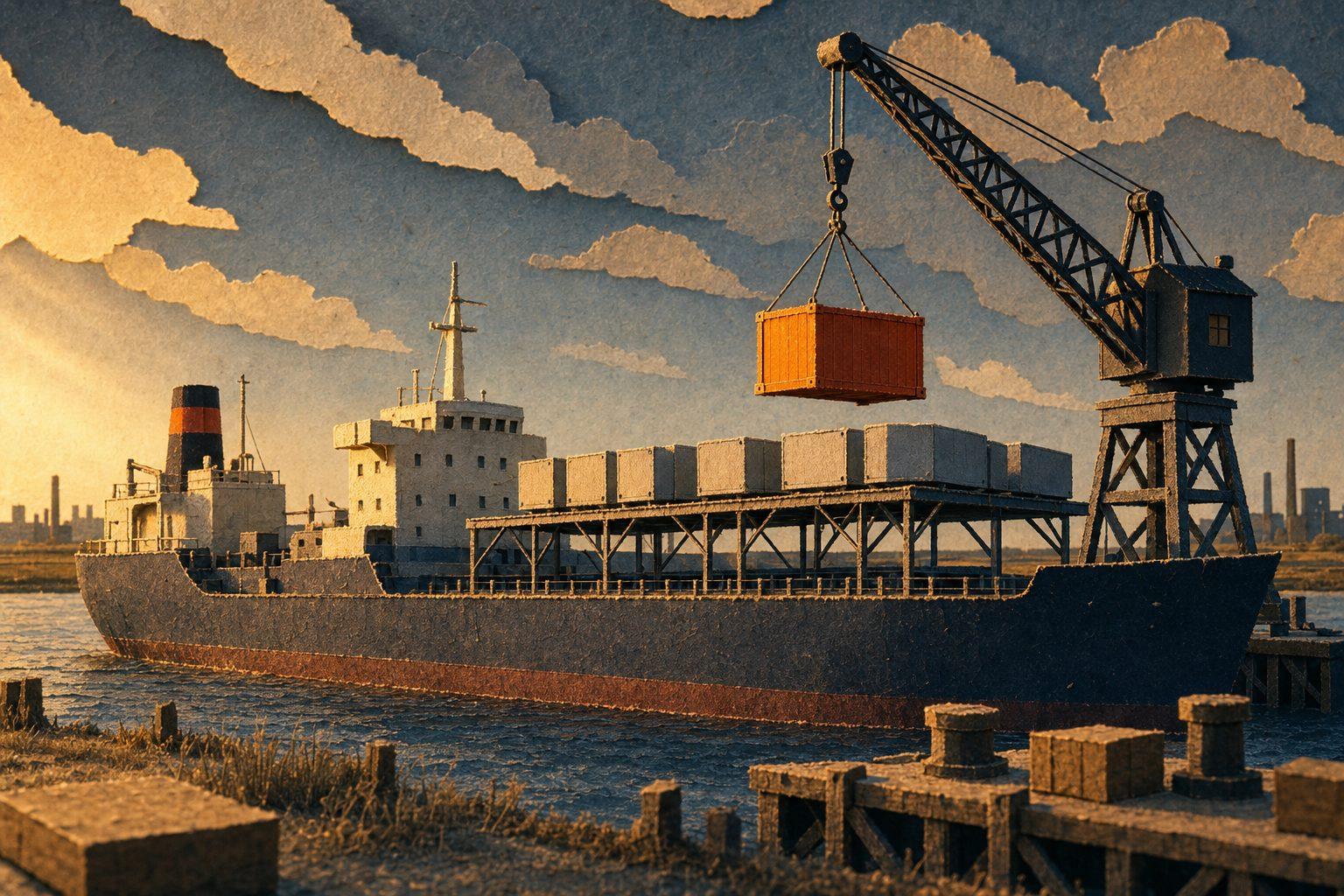
His idea sounds almost too simple: lift the whole box off the truck and put it on the ship. On 26 April 1956, an old tanker called the Ideal X left Newark for Houston with 58 of those boxes on a raised deck. Loading loose cargo cost $5.83 a ton at the time. Loading the Ideal X cost about 16 cents.
A box that fitted nowhere
There was a catch. McLean's boxes were 35 feet long, the longest trailer allowed on the roads his trucks used. The Matson line in the Pacific chose 24 feet. Other companies picked other sizes, with their own fittings. A box that only your own crane can lift is just a very large crate.
The savings only came once everyone agreed. Talks began in the United States in 1958, and the international standards body ISO set up its container committee in 1961. By 1968 the world had settled on boxes of 20 and 40 feet, with the same steel corner fittings that any crane, truck, train or ship can grip.
The world catches on
In April 1966, McLean's ship Fairland left New Jersey with 226 containers and reached Rotterdam on 3 May: the first regular all-container service across the Atlantic. At the same time, the war in Vietnam choked American supply lines. Container ships helped, and ships that would have sailed home empty began calling in Japan for cargo. A trade route between East Asia and the West had opened.
Who paid the price
The box made goods cheaper and made a way of life disappear. In 1970, London still had 16,573 registered dockworkers. By 1989, 1,739 were left. Container ports needed space, deep water and road and rail links that old city docks did not have, so the work moved to new terminals such as Felixstowe.
So why is everything made somewhere else?
The container did not invent global trade. It made distance cheap. Shipping a pair of shoes across the Pacific now typically costs less than one percent of what they are worth. Once distance stopped mattering, companies could make things wherever it was cheapest. That is where your shirt, your phone and your sofa came from.